
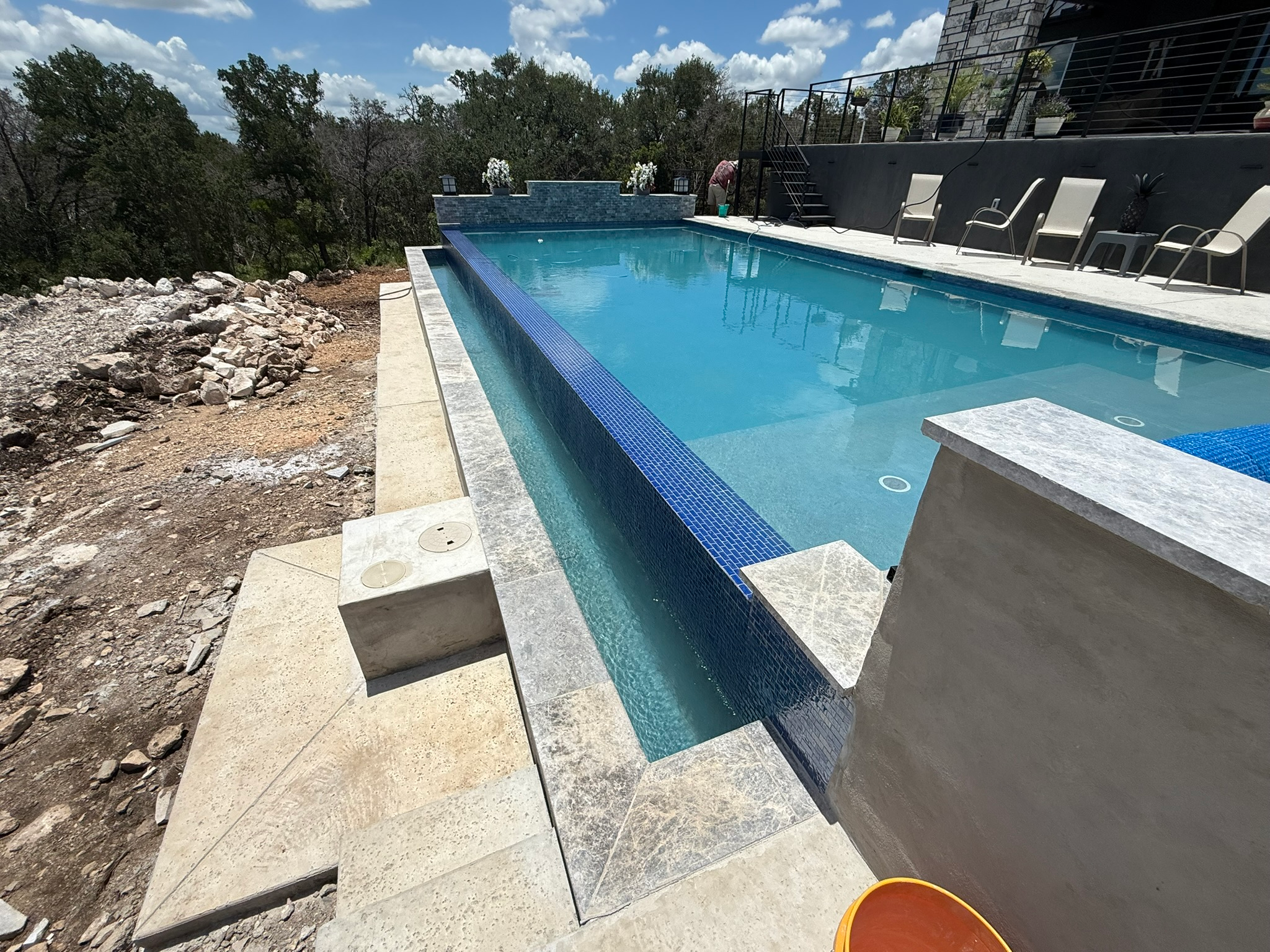
Creating Luxury That Belongs in the Landscape
A luxury backyard pool should feel like a natural extension of the Austin landscape rather than an isolated feature placed in the middle of a yard. The most successful designs combine refined architecture, natural materials, thoughtful landscaping, and water features that work together as one environment. Austin homeowners have a unique opportunity to create this connection because the region offers a distinctive combination of limestone, native vegetation, mature trees, open skies, and varied terrain. We approach luxury pool design by considering the character of the property before deciding on the shape, materials, or decorative features of the pool. This allows the finished space to feel intentional while still maintaining a relaxed connection with nature. Renaissance Pools believes that true luxury is not simply about adding more features, but about creating a backyard environment where every element feels connected.
Start With the Natural Character of Your Property
The existing landscape should be the starting point for any luxury pool project in Austin. Before construction begins, homeowners should consider the position of mature trees, changes in elevation, existing vegetation, views from the home, and the amount of sunlight received throughout the day. These characteristics can influence everything from pool orientation to deck placement and planting choices. A pool that responds to the natural conditions of the property will generally feel more integrated than one designed without considering its surroundings. Existing stone formations, mature trees, slopes, and garden areas can become important design references for the overall project. By working with the landscape instead of trying to completely transform it, we can create an outdoor environment that feels sophisticated while remaining connected to its natural setting.
Choose Pool Shapes That Feel Organic
The shape of the pool has a major influence on whether the backyard feels architectural or natural. Highly geometric pools can create a dramatic contemporary appearance, but softer lines can often work beautifully with Austin’s natural surroundings. Freeform curves, subtle bends, elongated shapes, and irregular edges can help the water appear as though it belongs naturally within the landscape. This does not mean that a natural-looking pool has to appear rustic or informal. Carefully designed curves can be combined with premium materials, elegant coping, sophisticated lighting, and modern outdoor architecture to create a luxurious result. The key is to select a shape that responds to the architecture of the home while also complementing the terrain and vegetation surrounding it.
Use Austin Limestone and Natural Materials
Material selection can make the difference between a pool that looks disconnected and one that feels deeply rooted in its surroundings. Austin limestone is particularly valuable for creating a visual relationship between the pool environment and the regional landscape. Natural stone can be incorporated into retaining walls, raised planters, steps, water features, seating areas, and portions of the pool deck. Other materials such as textured concrete, natural wood, stone pavers, and carefully selected porcelain can complement the landscape without competing with it. The goal should be to create a palette that looks cohesive rather than combining too many contrasting surfaces. Renaissance Pools uses material combinations thoughtfully so that the pool, patio, landscaping, and home appear to belong to the same overall design.
Integrate Native and Adapted Landscaping
Landscaping is one of the most important elements when creating a natural luxury pool environment. Instead of surrounding the pool with plants selected purely for appearance, homeowners can incorporate species that are well adapted to the Austin climate and local growing conditions. Native and adapted plants can provide texture, seasonal interest, privacy, shade, and a stronger connection to the regional environment. Grasses, ornamental plants, native shrubs, trees, and carefully positioned planting beds can soften hardscape edges around the pool. Layering plants at different heights can also make the backyard feel more established and immersive. When the landscaping is designed as part of the pool project rather than added afterward, the entire outdoor space can develop a more cohesive and natural appearance.
Protect Mature Trees During Pool Construction
Mature trees can become some of the most valuable features in an Austin backyard, particularly when they provide shade and establish a sense of age and character. Their presence should therefore be considered carefully during the planning stage of a pool project. Pool placement, excavation, grading, drainage, and construction access can all affect the surrounding landscape. Working around important trees may require adjustments to the pool shape or deck layout, but those changes can produce a more distinctive final design. A mature tree positioned near the pool can provide natural shade while creating an attractive focal point that would be difficult to reproduce with newly planted vegetation. Protecting valuable existing landscape features can help the completed backyard feel established rather than newly manufactured.
Design Around Views and Sightlines
A luxury pool should be visually appealing from multiple locations, not just when someone is standing beside the water. The view from the kitchen, living room, primary bedroom, outdoor kitchen, covered patio, and major seating areas should all be considered during the design process. This approach can determine where the pool’s strongest visual features should be positioned. A raised spa, water wall, sculptural tree, fire feature, or carefully framed planting area can become a focal point when viewed from inside the home. At the same time, unnecessary structures can be positioned away from important sightlines so the backyard remains visually open. Thoughtful sightline planning allows the pool to become part of the home’s overall architecture and creates a stronger relationship between indoor and outdoor spaces.
Incorporate Water Features With Restraint
Water features can add considerable character to a luxury pool, but they should support the natural atmosphere rather than overwhelm it. A simple stone spillway, subtle cascade, infinity edge, or gently moving water feature can introduce sound and movement without making the pool feel overly artificial. The scale of the feature should correspond with the size of the backyard and the architecture of the home. Natural stone can be used to make water features feel more connected to the surrounding landscape. Carefully controlled water movement can also create a relaxing background sound that helps mask traffic and neighborhood noise. The best results often come from selecting one or two meaningful water elements rather than filling the pool with unrelated decorative features.
Create Multiple Outdoor Living Zones
A luxury backyard should provide more than a place to swim. Designing several outdoor zones can make the pool environment more functional throughout the year while preserving a natural sense of flow. Covered seating, outdoor kitchens, dining areas, tanning ledges, fire features, conversation spaces, and shaded retreats can all be positioned around the pool. These areas should be connected through consistent materials and carefully planned circulation rather than appearing as separate additions. Planting beds and changes in elevation can be used to define different zones without relying on excessive walls or barriers. This creates an outdoor environment where homeowners can move naturally between swimming, dining, relaxing, entertaining, and enjoying the landscape.
Balance Sun, Shade, and Privacy
Austin’s warm climate makes shade an important consideration when designing a luxury backyard pool. A beautiful pool can become less enjoyable if there are not enough comfortable areas protected from intense sunlight. Shade trees, pergolas, covered patios, architectural overhangs, and strategically placed umbrellas can provide relief while contributing to the visual design. Privacy should also be considered early rather than treated as an afterthought. Layered landscaping, privacy walls, fencing, raised planters, and carefully positioned structures can screen the pool area without making the backyard feel enclosed. The most successful designs create privacy while maintaining natural views, airflow, sunlight, and a feeling of openness.
Connect the Pool With the Home
The pool should feel like a continuation of the home’s architecture rather than a separate backyard installation. Architectural style, rooflines, exterior finishes, window placement, flooring materials, and colors can all influence the pool design. For example, a modern Austin home may benefit from clean pool lines, large-format paving, restrained planting, and minimalist water features. A more traditional home may work better with natural stone, softer pool contours, mature landscaping, and classic outdoor structures. Transitional properties can combine contemporary functionality with regional materials to create a timeless appearance. When the architecture and landscape share complementary proportions and materials, the transition from the house to the pool becomes much more seamless.
Add Luxury Through Details
Luxury is often most noticeable in the details rather than in the size of the pool. A carefully designed tanning ledge, integrated spa, elegant coping, hidden equipment areas, custom steps, built-in seating, and precisely positioned lighting can significantly improve the experience. Interior finishes can also influence how the water interacts visually with the surrounding landscape. Subtle textures and natural tones often create a more sophisticated appearance than overly bright or highly contrasting finishes. Functional details such as convenient access to controls, thoughtful drainage, comfortable circulation paths, and durable materials should receive the same attention as decorative elements. When every component is considered as part of the same design system, the backyard can feel exceptionally refined without appearing excessive.
Use Lighting to Preserve the Natural Atmosphere
Outdoor lighting should enhance the landscape without turning the backyard into an overly illuminated entertainment space. Underwater pool lighting can provide a soft glow while low-level landscape lighting can highlight trees, stone walls, planting beds, pathways, and architectural details. Lighting fixtures should be positioned carefully so that they create depth without producing unnecessary glare. Warm, subtle illumination can make natural materials look especially attractive after sunset. Lighting can also improve safety around steps, changes in elevation, walkways, and seating areas. By treating lighting as part of the landscape design rather than simply adding fixtures at the end, we can help the backyard transition naturally from daytime relaxation to evening entertaining.
Consider the Long-Term Landscape
A pool landscape should be designed with its future appearance in mind rather than judged only on the day construction is completed. Plants will grow, trees will mature, materials will weather, and outdoor living patterns may change over time. Plant selections should therefore account for mature size, maintenance requirements, seasonal appearance, and their relationship to the pool. Hardscape materials should also be selected for durability in an outdoor environment where they will experience heat, moisture, foot traffic, and changing weather conditions. Equipment access and maintenance areas should be planned so they remain practical without becoming dominant visual features. A thoughtful long-term approach helps ensure that the backyard becomes more attractive and integrated as it matures.
Build a Backyard That Feels Like Austin
The strongest luxury pool designs in Austin do not simply imitate resort environments from other regions. They draw inspiration from the qualities that make Central Texas distinctive, including limestone, native vegetation, warm natural colors, mature trees, changing terrain, and expansive outdoor spaces. These characteristics can be interpreted through contemporary architecture and sophisticated pool technology without losing their regional identity. A natural luxury pool should feel comfortable, elegant, and connected to the property at the same time. Every design decision, from the pool’s geometry to the planting strategy, should contribute to that sense of connection. Our goal is to create outdoor environments that look beautiful in photographs but feel even better when homeowners actually use them.
The Right Approach to Luxury Pool Design
Designing a luxury backyard pool that feels natural requires coordination between architecture, landscape design, materials, water, lighting, and outdoor living. The pool should respond to the home’s proportions while respecting existing site conditions and the character of the Austin environment. Natural materials can soften architectural elements, while thoughtful planting can make the pool feel established within the landscape. Functional outdoor spaces can make the backyard useful for everyday relaxation as well as larger gatherings. With careful planning, luxury does not have to mean excess, and natural does not have to mean rustic. Renaissance Pools brings these principles together to help homeowners create sophisticated pool environments that feel comfortable, intentional, and naturally connected to the Austin landscape.