
Why Drainage Matters in Austin Pool Construction
A swimming pool can become one of the most valuable and enjoyable features of an Austin property, but its performance depends on much more than the pool shell, decking, and water circulation system. Proper drainage is a critical part of the overall construction process because water must be directed away from the pool structure, surrounding surfaces, foundations, and other parts of the property. Austin properties can experience intense rainfall, rapid changes in weather, and periods when large volumes of stormwater move across a landscape within a short time. Without an effective drainage strategy, runoff can collect around the pool deck, wash away soil, damage landscaping, or create excessive pressure against surrounding structures. Experienced pool construction professionals understand that drainage should be considered during planning and site preparation rather than treated as a correction after construction is complete. At Renaissance Pools, we approach pool construction with the understanding that long term performance depends on how the entire outdoor environment is designed to manage water.
Evaluating the Property Before Construction Begins
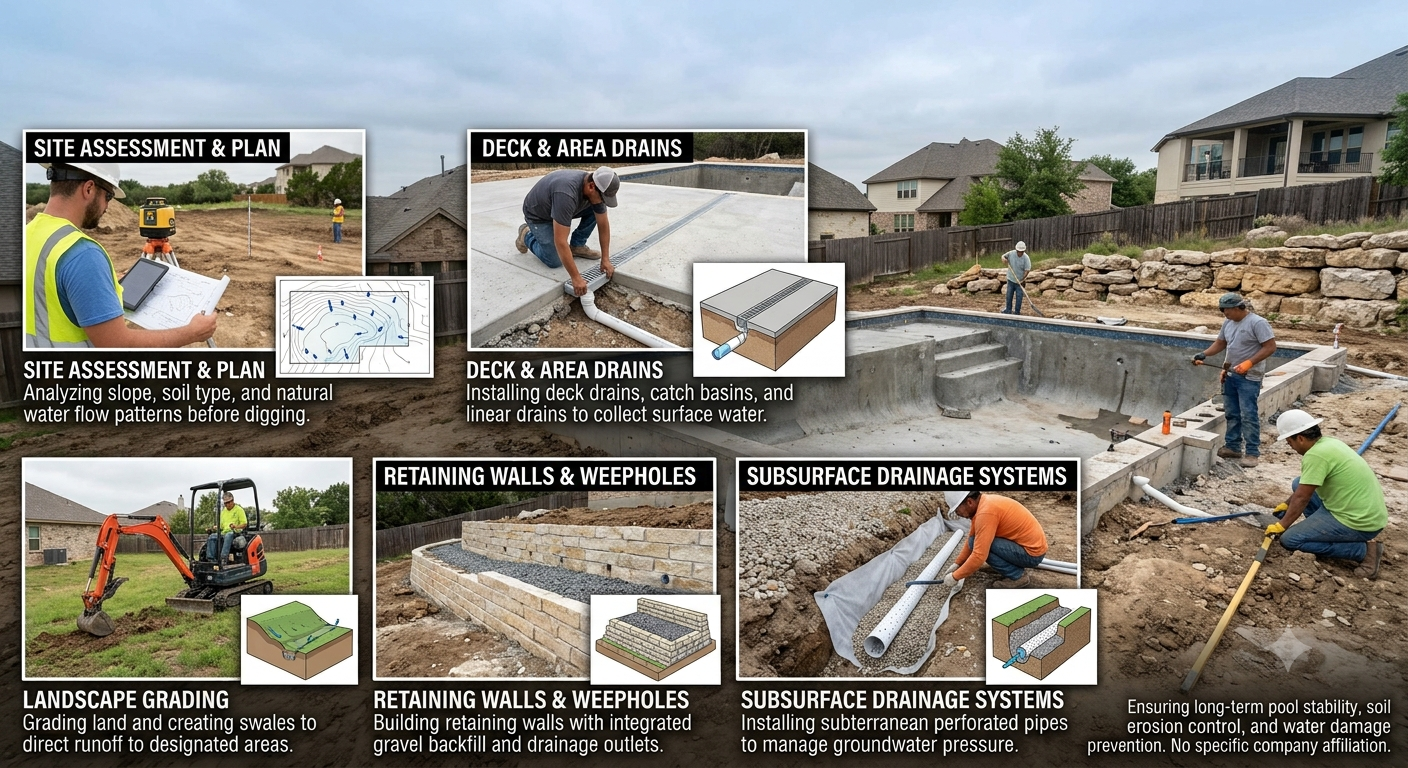
Experienced pool builders begin by studying the property before determining the final pool location and surrounding layout. The natural slope of the land can significantly influence how rainwater moves across the site, making grading one of the most important considerations during the planning stage. Professionals examine whether the proposed pool area sits on a natural low point, near a slope, beside an existing structure, or in an area where water may naturally accumulate. They also consider existing landscaping, patios, driveways, retaining walls, fences, and other hardscape elements that may influence runoff patterns. This evaluation allows the construction team to identify potential drainage challenges before excavation and structural work begin. By understanding the site’s existing conditions, experienced professionals can develop a drainage approach that works with the property rather than forcing water into areas where it may cause damage.
Creating Proper Grades Around the Pool
Grading is one of the most effective ways to control surface water around a swimming pool. During construction, the surrounding soil and hardscape areas can be carefully shaped so that rainwater moves away from the pool rather than toward it. Even relatively small changes in elevation can influence where water collects during a heavy storm. Experienced contractors understand how the pool deck, surrounding landscape, and adjacent areas should interact to create controlled drainage paths. They also recognize that grading must be planned alongside the final elevations of decking, coping, landscaping, outdoor structures, and other features. Proper grading helps reduce standing water while also protecting the pool area from unnecessary erosion and moisture-related problems.
Designing Pool Deck Drainage Correctly
Pool decking must be designed with drainage in mind because large paved surfaces do not absorb rainfall in the same way that soil and landscaped areas do. If the deck is installed without appropriate slopes and drainage pathways, water can remain on the surface or move toward the pool and nearby structures. Experienced pool construction teams determine appropriate elevations and slopes during the design phase so water can leave the deck efficiently. Depending on the property and design, drainage may involve carefully planned surface slopes, channel drains, area drains, or other site-specific solutions. The placement of these drainage features matters because poorly positioned drains may fail to capture water effectively during significant rainfall. A properly designed deck therefore does more than provide an attractive walking surface because it also becomes an important component of the property’s stormwater management strategy.
Protecting the Pool Structure From Excess Water
Excess water around a pool can create problems that extend beyond temporary puddles. Persistent moisture around the pool structure can contribute to soil movement, erosion, landscaping damage, and other conditions that may affect the surrounding construction. Experienced professionals therefore consider how water will behave around the excavation and completed pool structure throughout the project. Soil conditions, surrounding grades, drainage routes, and nearby structures all influence the appropriate approach. Construction teams can also account for how rainwater may enter the site from areas outside the immediate pool footprint. By considering these factors before construction is completed, professionals can reduce the likelihood that uncontrolled runoff will become a recurring problem.
Managing Runoff From Sloped Properties
Some Austin properties present additional challenges because of natural slopes or changes in elevation across the lot. When a pool is positioned below a higher section of the property, rainwater can travel toward the pool area with considerable force during a storm. Experienced pool builders recognize this condition during the design process and plan drainage routes that intercept or redirect runoff before it reaches vulnerable areas. Depending on site conditions, this may involve strategically placed drainage systems, grading adjustments, retaining features, or combinations of several techniques. The goal is to control water before it becomes concentrated around the pool deck or structure. Careful planning is particularly important because simply adding a drain at the lowest point may not adequately address water that is entering the area from a higher elevation.
Preventing Soil Erosion Around Pool Areas
Uncontrolled stormwater can gradually remove soil from landscaped areas surrounding a swimming pool. What begins as minor erosion can eventually expose roots, disturb plants, create uneven ground, and alter the way water flows across the property. Experienced pool construction professionals consider the velocity and direction of runoff when planning the landscape surrounding the pool. They may coordinate grading, planting areas, drainage features, and hardscape elements to slow and redirect water where necessary. Stabilizing vulnerable areas can also help maintain the finished appearance of the property after periods of heavy rainfall. Preventing erosion from the beginning is generally more effective than repeatedly repairing areas after water has already caused visible damage.
Coordinating Drainage With Landscaping
Landscaping and pool drainage should not be treated as completely separate aspects of an outdoor project. Planting beds, turf, trees, decorative stone, and other landscape elements can all influence how water moves through a property. Experienced construction teams coordinate these elements with the drainage design so that landscaping supports rather than interferes with water management. For example, soil added during landscaping can change finished elevations and potentially create areas where water begins to collect. Plant beds can also become unintended barriers if they are positioned directly across an intended drainage route. Coordinating landscape installation with pool construction helps preserve the intended grading and ensures that the finished outdoor space remains both functional and visually cohesive.
Considering Austin’s Heavy Rainfall Events
Austin’s weather makes stormwater planning particularly important for outdoor construction projects. A drainage system that appears adequate during ordinary rainfall may perform differently when a significant storm produces a large amount of water within a short period. Experienced pool builders therefore consider more than average weather conditions when developing drainage strategies. They examine how water could move across the property during intense rainfall and identify areas where runoff could become concentrated. This forward-looking approach helps reduce the risk of drainage systems being overwhelmed by conditions that were not considered during the original construction. Designing with Austin’s climate in mind allows homeowners to enjoy their pool area with greater confidence when severe weather arrives.
Keeping Water Away From Existing Structures
Many residential pool projects take place near existing homes, garages, outdoor kitchens, patios, retaining walls, and other structures. Drainage planning must therefore account for the relationship between the new pool area and everything already established on the property. Water redirected away from the pool should not simply be sent toward another structure where it could create a different problem. Experienced contractors evaluate the entire drainage path and consider where water will ultimately go after leaving the pool area. This comprehensive approach is especially important on properties with limited space between the pool and existing construction. Effective drainage is not simply about moving water away from one location because it is about directing water toward an appropriate destination.
Using Drainage Features Where They Are Actually Needed
Drainage systems are most effective when their design and placement respond to the specific conditions of the property. Experienced pool construction professionals do not rely on a single generic drainage solution for every project because every lot has different elevations, soil characteristics, structures, and water flow patterns. Some properties may benefit from surface drainage, while others may require additional measures to intercept water moving from higher areas. The quantity and location of drainage features should be determined based on how water behaves across the site. Properly designed systems can capture water at strategic points before it becomes concentrated or causes surface damage. This site-specific approach helps ensure that drainage features serve a functional purpose rather than simply being added as an afterthought.
Avoiding Drainage Problems Through Construction Precision
Good drainage depends heavily on accurate construction because even a well-designed system can perform poorly if finished elevations are incorrect. Pool decks, coping, drainage channels, grading transitions, and landscape areas must be installed according to the intended design. Small deviations can change the direction of surface water and create unexpected collection points. Experienced crews understand the importance of checking elevations throughout the construction process rather than waiting until the project is finished. They also coordinate different stages of construction so that one trade does not unintentionally disrupt drainage established by another part of the project. Attention to these details can make a significant difference in how the completed pool area handles rainfall.
Planning Drainage Before the Pool Is Excavated
One of the biggest advantages of working with experienced pool construction professionals is that drainage can be integrated into the project from the beginning. When drainage is considered before excavation, the pool position, deck elevations, landscaping, and surrounding structures can all be coordinated more effectively. Waiting until the pool is complete can limit the available options and may require expensive modifications to finished surfaces. Early planning also gives the construction team an opportunity to identify site conditions that could affect the project schedule or design. This approach creates a more cohesive relationship between the pool, hardscape, landscape, and drainage systems. Our team at Renaissance Pools considers the broader site conditions so drainage is incorporated into the overall construction strategy rather than treated as an isolated feature.
Why Experience Makes a Difference
Pool construction involves many interconnected systems, and drainage is one area where practical experience can have a major impact on the finished result. Experienced professionals have a better understanding of how grading, soil, hardscape, landscaping, structures, and rainfall interact on residential properties. They can identify potential problems that may not be obvious when looking only at the proposed pool design. They also understand that an attractive pool installation should continue performing properly after construction is finished and weather conditions change. This perspective encourages careful planning instead of relying on quick fixes after drainage problems appear. Choosing an experienced construction team can therefore help homeowners address water management as part of the original design rather than discovering preventable problems later.
Building a Pool Environment Designed for Long Term Performance
A successful swimming pool project should be designed around the complete property rather than focusing exclusively on the pool itself. Drainage, grading, decking, landscaping, structures, and stormwater movement all contribute to how the finished outdoor space performs. When these components are coordinated from the beginning, homeowners can reduce the likelihood of standing water, erosion, runoff problems, and unnecessary maintenance. Experienced pool construction professionals bring this broader perspective to the planning process and use site-specific information to develop practical solutions. The result is an outdoor environment that is not only attractive but also prepared to handle changing weather conditions. For Austin homeowners, investing in thoughtful drainage planning during pool construction can be an important step toward protecting the property and preserving the quality of the entire pool area for years to come.