
Creating a Pool for More Than One Stage of Childhood
A family pool should be designed with the understanding that children do not stay the same age for very long. The shallow play area that works perfectly for young children may become less useful once they begin swimming confidently, socializing with friends, and spending longer periods in the water. A well-planned pool can accommodate these changing needs without requiring major structural changes later. When we design a family pool, we consider how the space can remain practical, comfortable, and attractive through different stages of family life. This means looking beyond current preferences and thinking about how children may use the pool five or ten years from now. With the right combination of depth, layout, seating, circulation, and surrounding features, a pool can become a long-term part of the home rather than something designed around only one phase of childhood.
Choosing a Pool Layout That Grows With Your Family
The overall pool shape has an important influence on how easily the space can adapt as children grow. A layout with clearly defined areas can provide a comfortable place for younger children while leaving enough open water for older swimmers. Instead of creating an oversized shallow section that may eventually become underused, homeowners can consider a balanced transition between shallow and deeper areas. This approach allows children to begin with supervised water play before gradually moving into more active swimming. We also consider how the pool connects to the deck, patio, landscaping, and entertaining areas because teenagers often use the pool differently from younger children. A flexible layout can therefore support family swimming, recreational activities, and social gatherings without making the pool feel disconnected from the rest of the property.
Planning Depths for Changing Swimming Abilities
Pool depth deserves careful consideration when designing a space for children who will develop rapidly over the years. Younger children generally benefit from an appropriately designed shallow area where they can become comfortable around water under proper supervision. As their swimming ability improves, they may want more room for swimming, diving where appropriate, games, and other activities that require greater water depth. We can design transitions between different areas so that the pool remains useful as children become stronger and more confident swimmers. The goal is not simply to create different depths but to ensure that the entire pool works as a cohesive environment. Proper depth planning also helps homeowners avoid designing a pool that becomes restrictive once children outgrow early childhood activities.
Incorporating a Comfortable Shallow Area
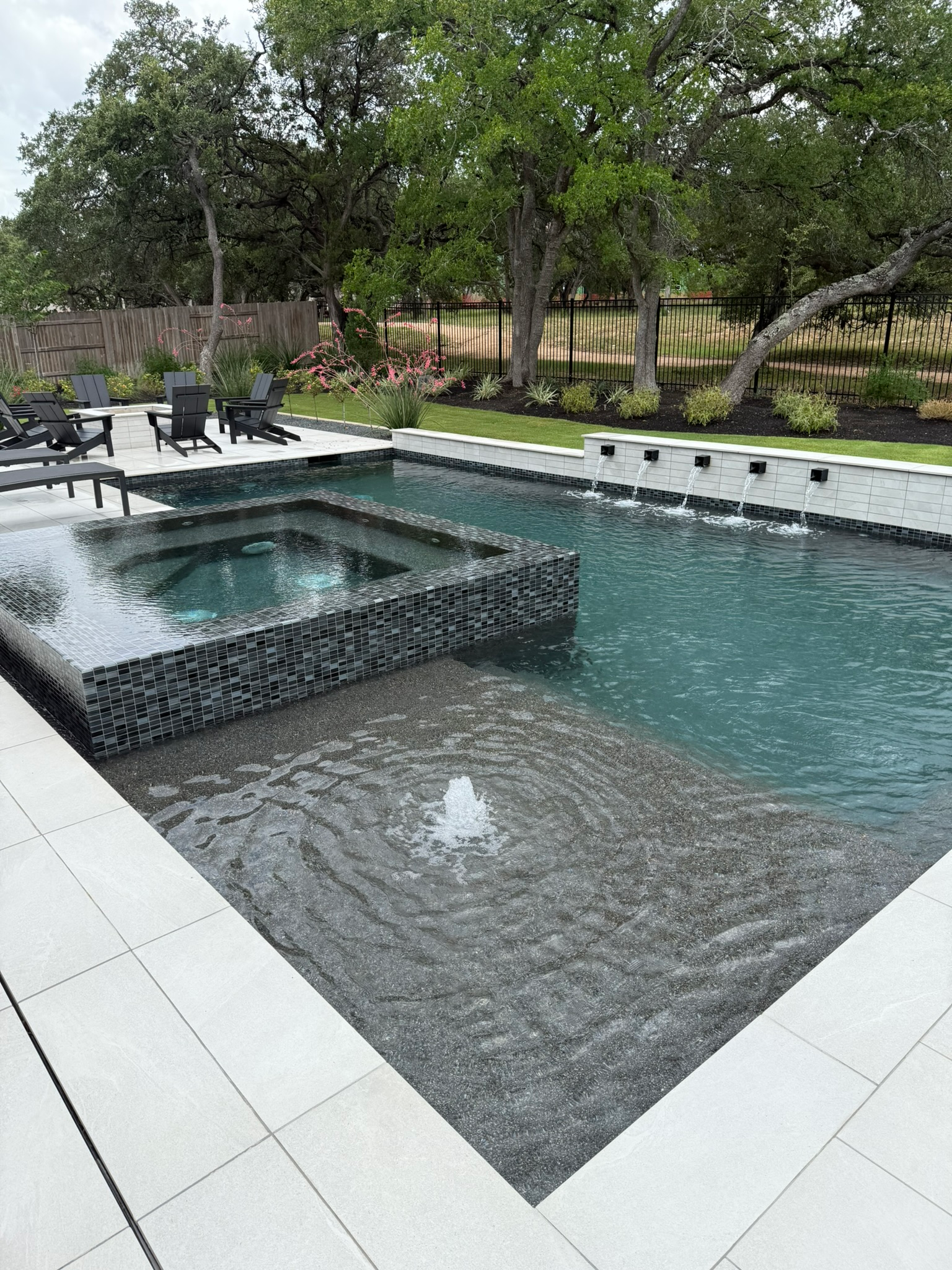
A shallow lounging or play area can be extremely valuable for families with younger children, but it should be considered as part of the pool’s long-term design. A broad shallow section can provide space for supervised play, sitting in the water, and introducing children to swimming in a comfortable environment. As children grow older, the same area can become a relaxing place to sit, talk, read, or spend time in the water without swimming continuously. This makes the feature useful beyond its original purpose and gives it greater long-term value. We look at the proportions of the shallow area carefully so it does not dominate the pool or limit the amount of usable swimming space. Thoughtful planning allows one feature to serve several purposes as the family’s lifestyle changes.
Designing Spaces for Teenagers to Socialize
Teenagers often use a family pool as much for social interaction as they do for swimming. Friends may visit during weekends, school breaks, birthdays, or summer gatherings, creating a need for comfortable areas where people can sit, talk, and move between the pool and outdoor living spaces. A pool design can accommodate this by incorporating broad deck areas, water-level seating, tanning ledges, or other suitable gathering spaces. These features can make the pool more attractive to teenagers while also providing adults with comfortable areas for relaxation. We consider how people will enter and leave the water, where they will sit between swims, and how the surrounding outdoor space can support larger groups. Planning these details early can help the pool remain functional as children’s social lives become more active.
Adding Built-In Seating for Long-Term Comfort
Built-in seating can give a family pool greater flexibility without requiring additional furniture to occupy valuable deck space. Underwater benches, integrated ledges, and strategically positioned seating areas can serve different purposes depending on the age of the swimmers. Younger children can use shallow seating areas for supervised water play, while older children and teenagers may use them as places to relax with friends. Adults can also benefit from these spaces when they want to remain in the water without actively swimming. We consider the placement and dimensions of seating so that it complements circulation rather than creating unnecessary obstacles. A well-integrated seating feature can therefore remain useful throughout the life of the pool and contribute to a more polished overall design.
Thinking Beyond Swimming
A family pool should support more than swimming because outdoor living habits often evolve as children mature. Younger children may spend hours playing in the water, while teenagers may alternate between swimming, relaxing, listening to music, talking with friends, and using nearby outdoor entertainment areas. Creating connections between the pool, patio, seating, landscaping, and outdoor kitchen can make the entire backyard more functional. We can consider sightlines and movement patterns so parents can maintain awareness of younger children while older children have appropriate space for independence. This balance becomes particularly important as children grow and families begin using the backyard for larger gatherings. A thoughtfully integrated design can turn the pool area into an outdoor living environment rather than treating the pool as an isolated feature.
Planning Poolside Areas for Changing Social Needs
The area immediately surrounding a pool can become just as important as the water itself when children reach their teenage years. Teenagers may want space to sit with friends, enjoy refreshments, use outdoor furniture, or simply spend time together without being in the pool continuously. A generous pool deck with comfortable circulation can accommodate these activities without creating congestion. Shade structures, covered seating, landscaping, and outdoor living features can further improve the usability of the space during hot weather. We consider how these areas relate to the house so that the transition between indoor and outdoor spaces feels natural. By designing the pool environment as a complete outdoor setting, homeowners can create a space that continues to support family life well beyond the early years of childhood.
Creating a Pool That Works for Adults Too
Designing for children does not mean sacrificing the needs of parents and other adults in the household. A pool that is heavily focused on children’s play may eventually feel less appealing once the children become teenagers or leave home. Incorporating elegant finishes, comfortable lounging areas, integrated seating, attractive landscaping, and sophisticated architectural details can ensure the pool remains enjoyable for everyone. We look at the long-term balance between recreational features and relaxation areas so the pool feels appropriate for the entire household. Adult-friendly features can also become increasingly important as teenagers spend more time with friends and less time participating in family activities. A successful family pool should therefore evolve without losing its appeal to the people who invested in it.
Considering Safety as Children Become More Independent
Children becoming stronger swimmers does not eliminate the need for thoughtful pool safety planning. As they grow older, they may have greater independence, invite friends over, and use the pool at different times of day. This makes it important to consider appropriate barriers, access control, visibility, lighting, and other safety considerations from the beginning of the design process. We also consider how the surrounding landscape and structures affect visibility from the house and outdoor living areas. Safety features should be integrated into the design rather than treated as an afterthought that compromises the finished appearance. A pool can provide increasing independence for older children while still maintaining sensible safeguards for everyone who uses the space.
Preparing for Teen Parties and Larger Gatherings
The transition from family swimming to teenage social gatherings can significantly change how a backyard pool is used. A pool that comfortably accommodates four family members may feel crowded when several teenagers arrive with friends. Planning sufficient deck space, seating, circulation, and access to outdoor amenities can make these gatherings easier to manage. We consider how guests will move around the pool without blocking entrances, seating areas, or key pathways. Durable finishes and practical outdoor surfaces can also become valuable when the space experiences heavier use. Thinking about future gatherings during the initial design stage can prevent homeowners from discovering years later that their pool area lacks the space needed for the family’s changing lifestyle.
Selecting Finishes That Remain Attractive Over Time
A pool designed for a growing family should also have a visual character that can withstand changing tastes. Young children may have strong preferences for playful colors or themed features, but those choices may not appeal to teenagers several years later. Neutral and timeless finishes can provide a sophisticated foundation while allowing personality to be introduced through furniture, landscaping, accessories, and removable elements. This makes it easier to refresh the appearance of the outdoor space without undertaking another major renovation. We focus on creating a cohesive aesthetic that works with the architecture of the home and remains attractive through different stages of family life. Long-lasting design choices can ultimately provide greater flexibility and reduce the pressure to redesign the pool as preferences change.
Incorporating Flexible Technology and Lighting
Technology can also contribute to a pool’s ability to adapt as children grow. Properly planned lighting can support evening swimming, entertaining, relaxation, and improved visibility around important areas of the pool and deck. Automated pool equipment can make maintenance and water management more convenient as usage patterns change throughout the year. Smart controls may also allow homeowners to manage certain pool functions more easily from appropriate devices. We consider technology as part of the overall design rather than adding equipment without regard to the appearance or usability of the space. Building flexibility into the pool infrastructure can make future upgrades easier and help the outdoor environment remain current as family needs evolve.
Designing Landscaping That Can Mature With the Pool
Landscaping should be considered alongside the pool because plants and outdoor structures can dramatically change as they mature. A landscape that provides limited shade when newly installed may offer substantial coverage several years later, while fast-growing plants can eventually affect views, circulation, or pool maintenance. We consider mature plant sizes, privacy requirements, maintenance demands, and how landscaping will interact with the pool throughout its lifespan. Strategic planting can create areas where teenagers feel comfortable socializing while still preserving attractive views from the home. Landscaping can also provide separation between different activity zones without making the backyard feel divided. With careful planning, the surrounding environment can mature alongside the pool and become an increasingly important part of its character.
Avoiding Features That Become Quickly Outdated
Some pool features are appealing because they are highly specific to a child’s current age, but they may have limited value later. Instead of designing the entire pool around one temporary interest, it can be more effective to incorporate adaptable features that serve multiple purposes. A shallow ledge can transition from supervised play to relaxation, while open deck space can change from a children’s activity area into a teenage gathering space. This type of flexibility allows homeowners to enjoy the pool now without making major compromises for the future. We evaluate each design element based on how useful it may remain as the household changes. The result can be a pool that feels intentional at every stage rather than one that gradually becomes outdated.
Building a Backyard That Supports Independence
As children enter their teenage years, they often want more independence while parents still want a comfortable level of oversight. Pool design can help achieve this balance by creating areas where teenagers can spend time with friends while maintaining clear visibility from key areas of the home. Outdoor seating, landscaping, and architectural features can provide a sense of separation without creating hidden or inaccessible spaces. We consider these relationships carefully because the backyard should support both family connection and age-appropriate independence. The pool can become a place where teenagers develop confidence in managing their own activities while the overall environment remains thoughtfully organized. This balance can make the backyard more enjoyable for both teenagers and parents.
Planning for the Years After the Teenager Stage
A truly adaptable pool should continue to work even after children become adults. Once teenagers leave home, the family may use the pool primarily for entertaining friends, relaxing, exercising, or enjoying quiet outdoor time. Designing with longevity in mind means avoiding a layout that only makes sense for children’s activities. Versatile seating, attractive landscaping, comfortable outdoor living areas, and balanced swimming space can all remain useful for decades. We approach family pool design with the broader goal of creating an outdoor environment that changes naturally with the household rather than requiring repeated reconstruction. This long-term perspective can make the original investment more rewarding because the pool continues to serve new purposes over time.
Creating a Pool With Long-Term Family Value
The best family pool designs are not necessarily the ones with the greatest number of features. They are the designs that understand how a family’s routines, interests, and relationships can change over time. Children become confident swimmers, teenagers begin socializing with friends, parents seek more opportunities for relaxation, and eventually the backyard may become a space primarily used by adults. A flexible pool can accommodate these transitions through thoughtful proportions, adaptable spaces, durable materials, appropriate safety planning, and a strong connection to the surrounding outdoor environment. At Renaissance Pools, we focus on creating pools that support the way families live today while remaining practical and attractive as their needs evolve. When the design is planned around the entire lifespan of the family, the pool can become a lasting part of the home rather than a feature tied to one particular stage of childhood.