
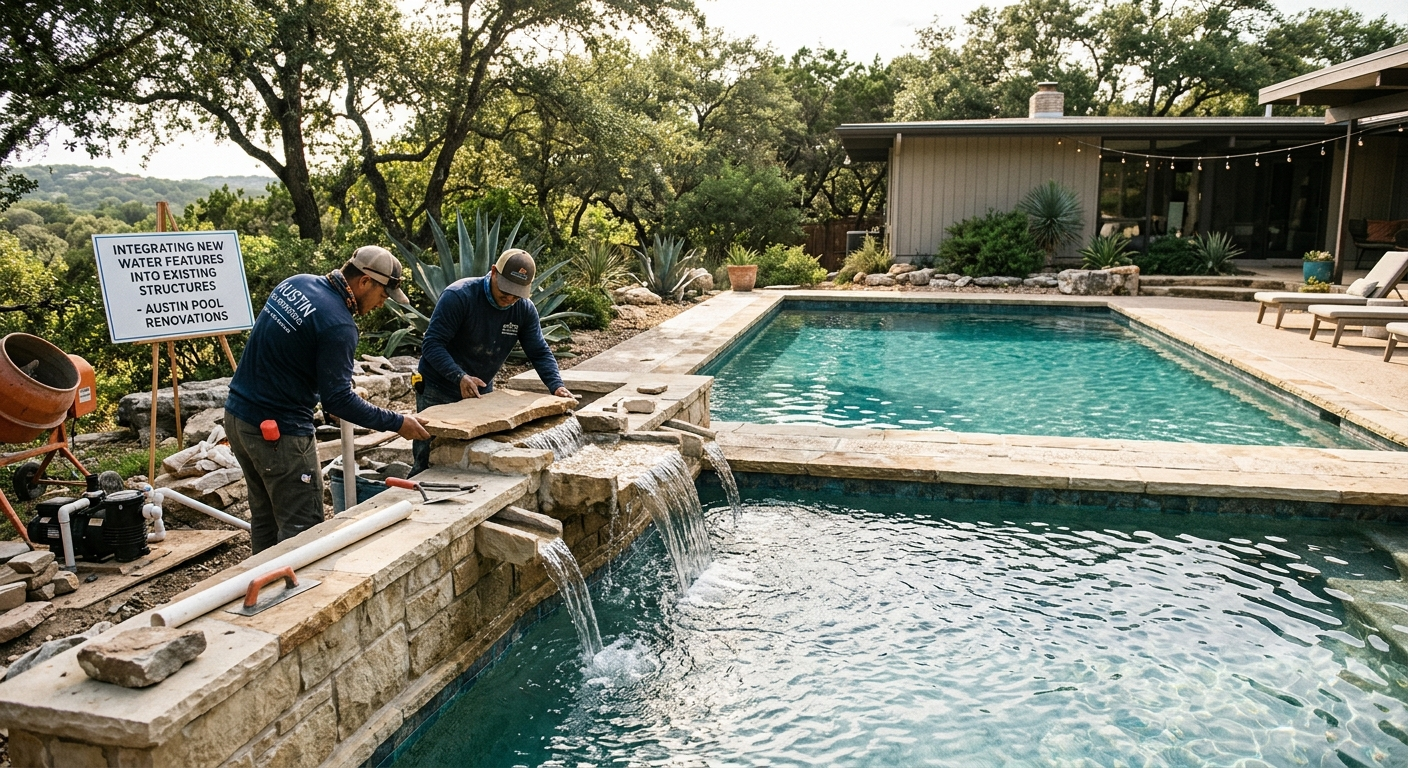
Reimagining an Existing Pool
Austin homeowners often want to refresh an aging swimming pool without completely removing the structure and starting again. Adding a thoughtfully designed water feature can transform the appearance, movement, sound, and overall atmosphere of an existing pool. During a renovation, we can evaluate the current pool shell, surrounding deck, plumbing, electrical systems, and available space before determining which additions are practical. This approach allows homeowners to improve the pool while preserving structural elements that remain useful and visually appealing. Water features can range from compact bubblers and deck jets to elegant sheer descents, fountains, and integrated waterfalls. At Renaissance Pools, we focus on creating additions that feel like part of the original pool rather than looking like separate installations.
Assessing the Existing Pool Structure
The first step in incorporating a new water feature is understanding how the existing pool was constructed. We examine the pool shell, coping, tile, deck configuration, equipment area, plumbing routes, and available water circulation capacity. This assessment helps determine whether the existing structure can accommodate additional plumbing and equipment without unnecessary demolition. It also allows us to identify potential limitations related to water pressure, drainage, electrical requirements, and equipment capacity. Older pools may require upgrades before a new feature can operate efficiently and reliably. Careful planning at this stage helps ensure that the finished renovation remains cohesive, functional, and appropriate for the property’s existing conditions.
Choosing a Feature That Fits the Design
Every pool has a different architectural style, surrounding landscape, and relationship with the home, so the right water feature depends on more than personal preference. A modern Austin pool may benefit from clean linear sheer descents or precisely positioned deck jets. A natural-looking backyard can accommodate stone waterfalls, rock formations, or gently cascading water that blends with landscaping. Smaller pools may benefit from compact bubblers or wall-mounted water features that provide visual movement without overwhelming the available space. We consider sightlines, proportions, circulation patterns, entertaining areas, and the architectural character of the property when developing the concept. The objective is to make the new feature appear intentional and integrated rather than added as an afterthought.
Integrating New Plumbing
Adding a water feature to an existing pool frequently requires modifications to the circulation system. New plumbing lines may need to be routed through the deck, walls, equipment area, or other carefully selected locations depending on the feature design. We determine the appropriate pipe sizing and flow requirements so the feature can produce the intended water movement without unnecessarily affecting the pool’s primary circulation. In some renovations, a dedicated pump may provide better control and performance than connecting the feature directly to the existing pump. Proper plumbing design also helps reduce pressure-related problems and supports consistent operation. Careful integration allows the new feature to function effectively while maintaining the performance of the overall pool system.
Creating Sheer Descents and Water Walls
Sheer descents and water walls are particularly effective when homeowners want a contemporary appearance without dramatically changing the footprint of the pool. These features can be incorporated into raised walls, existing raised bond beams, retaining structures, or redesigned seating areas. Water flows over a narrow edge to create a smooth sheet that visually connects the upper structure with the pool below. During renovation, the surrounding wall can also be updated with new tile, stone, or other finishes to make the feature appear integrated with the rest of the design. Lighting can further emphasize the falling water during evening use while adding depth to the pool environment. Our renovation planning considers both the visible feature and the concealed construction required to support it properly.
Adding Waterfalls to Existing Pools
Waterfalls can introduce a more organic character to an established swimming pool without requiring a complete reconstruction. Depending on the available space, a waterfall can be designed along an existing raised wall, spa edge, landscape feature, or newly constructed structure beside the pool. Natural stone, textured masonry, tile, and other finishes can help connect the feature with the surrounding landscape. The shape and elevation of the waterfall should be carefully considered because these factors influence both the visual effect and the sound of moving water. We also account for splash zones, drainage, circulation requirements, and maintenance access during the design process. When these elements are coordinated correctly, a waterfall can make an older pool feel like an entirely refreshed outdoor environment.
Integrating Bubblers and Deck Jets
Not every renovation requires a large architectural water feature to create a noticeable transformation. Bubblers can be incorporated into shallow areas, tanning ledges, raised sections, and other pool features to create gentle upward streams of water. Deck jets can send controlled arcs of water from the surrounding deck into the pool, creating movement across otherwise open areas. These options can be particularly useful when available space or existing structural conditions limit the size of a new installation. Their plumbing can often be planned around the existing pool layout while still creating a distinct visual effect. We can position these features to complement seating areas, landscaping, architectural details, and the primary swimming zone.
Connecting the Spa and Pool
A pool renovation also creates an opportunity to strengthen the visual relationship between an existing swimming pool and attached or nearby spa. Water can be designed to flow from a raised spa into the pool through spillways, tiled openings, or other carefully constructed transitions. Existing spas may sometimes be modified to create a more prominent spillover effect without replacing the entire pool structure. The height difference between the spa and pool must be considered because it influences the appearance, flow rate, and sound of the water. Plumbing and circulation adjustments may also be necessary to maintain appropriate water movement between the connected areas. A carefully integrated transition can make the entire pool and spa arrangement appear more intentional and architecturally unified.
Upgrading Pool Lighting
Water features become particularly noticeable after sunset when properly planned lighting is incorporated into the renovation. Underwater lights, nicheless fixtures, illuminated spillways, and strategically positioned landscape lighting can highlight moving water without making the area excessively bright. Lighting should be coordinated with the pool’s existing fixtures so the renovated area maintains a consistent visual character. We consider the position of the feature, viewing angles, water movement, and surrounding surfaces when planning illumination. Subtle lighting can emphasize texture in a stone waterfall or create a clean visual line beneath a modern sheer descent. The result can extend the visual impact of the renovation into evening gatherings and everyday outdoor use.
Working With Austin’s Outdoor Environment
Austin’s climate and outdoor lifestyle make pool design particularly important for homeowners who use their backyards throughout much of the year. A new water feature should therefore be selected with the surrounding landscape, outdoor living spaces, maintenance requirements, and local environmental conditions in mind. Placement can influence evaporation, splash, drainage, and how the feature interacts with nearby patios or planting areas. We also consider how the feature will look from interior rooms, covered patios, outdoor kitchens, and primary seating areas. A well-positioned feature can become a visual focal point even when the pool is not being used. Renovation planning should balance appearance with practical considerations so the feature remains enjoyable over time.
Managing Water Flow and Equipment
Water features require appropriate hydraulic planning because their performance depends on pressure, volume, pipe configuration, and pump capacity. Simply adding another feature to an existing circulation system without evaluating these factors can produce weak water flow or place unnecessary demands on equipment. We review the existing filtration and circulation setup before determining whether additional equipment or modifications are appropriate. Variable-speed pumps and independent controls can provide greater flexibility when different features have different operating requirements. Proper equipment planning can also make it easier to adjust water movement for swimming, entertaining, or quieter periods. This technical preparation helps ensure that the visual design is supported by reliable mechanical performance.
Preserving Useful Existing Elements
One of the advantages of renovation is the ability to retain portions of a pool that are still structurally sound and visually valuable. Existing coping, tile, decking, steps, benches, plumbing, or equipment may sometimes be incorporated into the updated design rather than replaced unnecessarily. Keeping suitable elements can help control the scope of construction while allowing the new water feature to become the centerpiece of the transformation. We evaluate each component individually rather than assuming that everything must be removed during the renovation. This approach can also create continuity between the original pool and its updated appearance. The finished project can therefore feel substantially refreshed while still respecting the property’s existing structure.
Designing for Maintenance
A water feature should be attractive, but it also needs to remain accessible for routine care and maintenance. Pumps, valves, plumbing connections, lighting components, and other mechanical elements should be positioned so that future servicing does not require unnecessary disruption to the surrounding pool or deck. Features should also be designed to manage splash and water movement appropriately around nearby surfaces. Materials and finishes need to be selected with long-term exposure to water and outdoor conditions in mind. We consider cleaning access, equipment servicing, water circulation, and general upkeep during the planning stage rather than treating maintenance as an afterthought. This creates a renovation that is easier to manage while preserving the appearance and performance of the new feature.
Making the Renovation Feel Original
The strongest pool renovations are often those where the new elements appear to have always belonged to the property. Achieving that effect requires coordination between the pool’s geometry, materials, colors, landscaping, lighting, and water movement. A modern feature placed into a traditional pool may require complementary finishes or architectural adjustments to create visual consistency. Similarly, an organic waterfall may need carefully selected stone and landscaping to avoid looking disconnected from the existing backyard. We look at the complete environment rather than designing the water feature in isolation. By connecting new construction with existing architectural and landscape elements, the renovation can create a cohesive outdoor space.
Planning the Complete Transformation
Integrating a new water feature is only one part of a successful pool renovation, but it can have a major effect on the character of the entire backyard. Homeowners can use the renovation process to reconsider tile, coping, decking, lighting, landscaping, circulation equipment, and surrounding outdoor living areas at the same time. Coordinating these improvements allows the new feature to become part of a broader design rather than an isolated upgrade. We develop renovation concepts around the existing structure while identifying opportunities to improve functionality, appearance, and long-term usability. With appropriate planning, even an older pool can gain new visual interest without requiring a complete replacement. Renaissance Pools approaches each project with the goal of creating a finished pool environment that feels cohesive, purposeful, and suited to the way Austin homeowners use their outdoor spaces.
Planning a Custom Pool in Austin?
Renaissance Pools is a family-owned custom pool builder serving Austin, Cedar Park, Lakeway, Bee Cave, Dripping Springs, West Lake Hills and nearby areas. We design and build custom gunite pools, spas, and outdoor living spaces like fire features and outdoor kitchens.
See our custom pool designs, learn about our pool construction process, or check pool financing options.
Call (512) 987-5117 or request your free estimate today.