
How Modern Pool Design Services Turn Difficult Backyard Slopes Into Design Features
Rethinking the Challenges of a Sloped Backyard
A sloped backyard can initially seem like one of the biggest obstacles when planning a new swimming pool. Uneven terrain creates concerns about excavation, drainage, accessibility, structural stability, and how the finished space will connect with the rest of the property. However, modern pool design has changed the way homeowners and designers approach these challenging landscapes. Instead of seeing elevation changes as problems that must be completely removed, thoughtful design can transform them into some of the most visually impressive elements of an outdoor environment. A natural slope can introduce depth, movement, privacy, and architectural character that a completely flat backyard may not provide. With the right planning, engineering, and creative vision, an awkward grade can become the foundation for a distinctive outdoor retreat. At Renaissance Pools, we approach sloped properties by studying how the existing terrain can contribute to the overall experience rather than automatically designing against it. Every elevation change presents opportunities to create separate zones, dramatic pool edges, terraced patios, retaining features, and elevated seating areas. The goal is to make the finished landscape feel intentional and harmonious with the architecture of the home. Modern construction techniques also give us more flexibility to work with complicated sites while maintaining structural integrity and long-term functionality. Rather than forcing a backyard into a completely level layout, we can use changes in elevation to create a design with greater visual interest. This approach often results in an outdoor space that feels more customized and memorable.Using Multiple Levels to Create a Resort-Style Experience
One of the most effective ways to work with a sloped property is through multi-level design. Instead of building one large flat surface, the backyard can be organized into connected terraces that each serve a different purpose. The swimming pool may occupy one level, while an outdoor dining space, lounge area, fire feature, or garden can occupy another. Small changes in elevation help define these areas naturally without requiring excessive walls or barriers. This creates a sense of movement throughout the backyard and encourages people to experience different parts of the space. When designed properly, multiple levels can make a backyard feel significantly larger and more sophisticated. Terraced designs also allow us to create a smoother transition between the home and the natural landscape. A patio close to the house may gradually step down toward the pool, creating a visual journey that feels deliberate and balanced. Wide steps can become architectural features rather than simple functional connections between levels. Seating walls, planters, and integrated lighting can further enhance these transitions while adding practical value. Materials can also be coordinated across each terrace to create visual continuity throughout the entire backyard. The result is a cohesive environment where the slope becomes part of the design language instead of something hidden beneath extensive grading.Creating Dramatic Infinity and Vanishing Edge Pools
A significant slope can provide an excellent opportunity for an infinity edge or vanishing edge pool. These designs use changes in elevation to create the visual effect of water extending toward the surrounding landscape. When positioned correctly, the edge of the pool can appear to merge with the horizon, nearby trees, a lake, or another attractive view. A sloped site naturally provides the elevation difference needed to make this type of feature especially dramatic. Instead of constructing a standard pool and trying to disguise the grade, the design can celebrate the property’s natural topography. This creates a stronger visual relationship between the pool and the environment beyond the backyard. Modern pool engineering makes it possible to construct these elevated water features with precision and durability. The lower portion of the structure can incorporate retaining systems, catch basins, and carefully designed circulation equipment. From the main entertainment area, homeowners experience a clean and uninterrupted waterline that becomes a focal point of the entire backyard. The surrounding decking can be positioned to enhance views and provide comfortable areas for relaxation. Even properties without distant scenic views can benefit from a vanishing edge when the pool is designed to overlook gardens, lower patios, or carefully landscaped areas. The slope becomes an advantage because it creates the vertical separation needed to produce a more dramatic composition.Integrating Retaining Walls Into the Overall Design
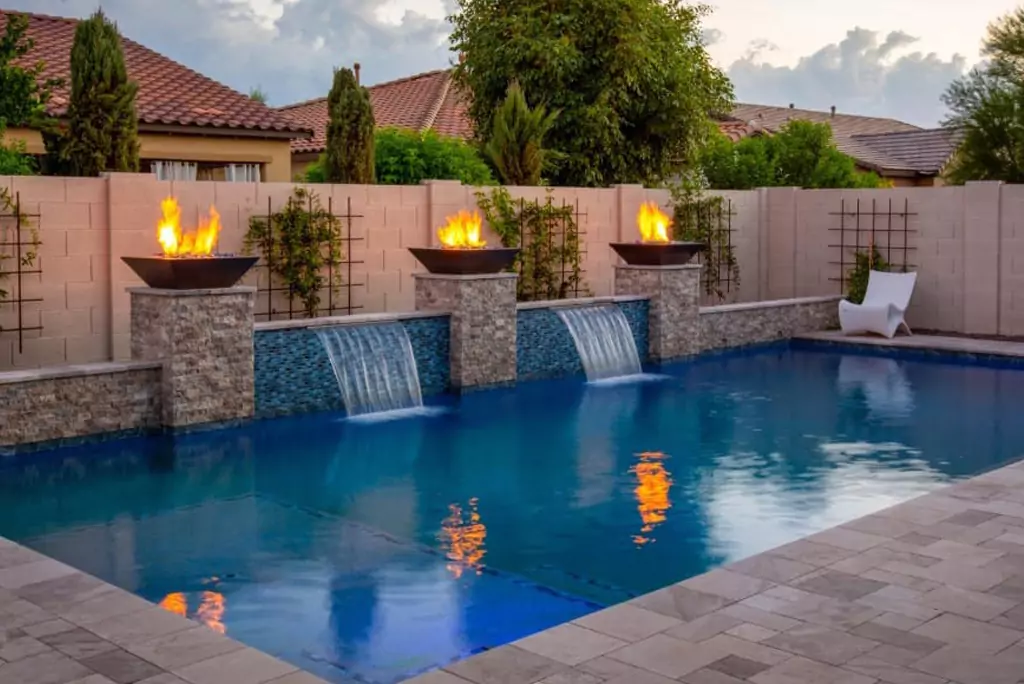
Retaining walls are often necessary when building on sloped land, but they do not have to look purely functional. Modern pool design allows retaining structures to become attractive architectural elements that contribute to the overall atmosphere of the backyard. Natural stone, porcelain materials, decorative concrete, tile, and textured finishes can transform a structural wall into a major design feature. A retaining wall can also incorporate built-in benches, planters, water features, and integrated lighting. By combining engineering requirements with aesthetic planning, we can make these necessary structures feel intentional rather than intrusive. This helps the entire space maintain a refined and cohesive appearance. The placement of retaining walls can also help organize the backyard into comfortable and usable zones. A wall behind a pool may create privacy while supporting a raised planting area filled with greenery. Another retaining structure might define an outdoor kitchen or create a backdrop for a fire feature. Water can cascade from an elevated wall into the pool, turning a grade change into a dynamic visual and sensory element. Lighting placed beneath wall caps or within planting areas can create dramatic effects during the evening. When thoughtfully integrated, retaining features become part of the landscape architecture and contribute significantly to the personality of the outdoor space.Turning Elevation Changes Into Water Features
Sloped properties are particularly well suited for creative water features because gravity and elevation naturally support movement from one level to another. A raised spa can spill gently into the main swimming pool, creating both visual interest and a soothing sound. Sheer descents, cascading waterfalls, and rain curtain features can also be incorporated into elevated walls or structures. These elements help connect different levels of the backyard while making the slope feel purposeful. The movement of water can soften the appearance of retaining structures and introduce a relaxing atmosphere. Instead of trying to eliminate every elevation change, the design can use those changes to create a more immersive pool environment. A multi-level water design can also add a strong sense of luxury to the backyard. For example, an elevated spa may serve as a focal point at the upper end of the pool while allowing water to flow naturally into the swimming area below. A series of smaller cascades can create the appearance of a natural water journey across the property. The materials surrounding these features can be selected to complement the home’s architecture and landscaping. Careful circulation planning ensures that the water features operate efficiently while maintaining the desired visual effect. Through this type of design, a difficult grade becomes an opportunity to create experiences that would be harder to achieve on a completely flat property.Designing Functional Spaces Around the Natural Terrain
A successful backyard is not defined by the pool alone, especially when working with a complex property. Modern design considers how people will move, gather, relax, and interact throughout the entire outdoor environment. Slopes can help naturally separate active areas from quieter spaces without making the backyard feel disconnected. A lower terrace might be designed for swimming and sunbathing, while an upper level becomes a peaceful dining or lounge area. Changes in elevation can create privacy between these spaces while preserving an open and connected feeling. This type of zoning allows the backyard to serve multiple purposes without requiring an excessively large footprint. We carefully consider circulation when connecting these different spaces. Steps, pathways, ramps, and transitional landings must feel comfortable and visually integrated into the design. Wide stairs can provide informal seating, while gradual transitions can make movement between levels feel effortless. Landscape elements can further soften the edges between hardscape areas and natural terrain. Strategic planting can also provide privacy, shade, and seasonal color throughout the property. By designing around the way people actually use the space, the slope becomes an organizational advantage that helps create a more functional backyard.Improving Drainage Through Intelligent Design
Drainage is one of the most important technical considerations on a sloped property, but it can be addressed without compromising aesthetics. Water naturally follows gravity, which means a poorly planned backyard can experience erosion, standing water, or runoff issues. Modern pool design begins with a detailed understanding of how water moves across the site. Surface grading, drainage channels, retaining systems, and landscaping must all work together to direct water appropriately. The pool itself must also be positioned with careful consideration of surrounding drainage patterns. Addressing these issues early allows the finished backyard to remain functional and attractive over time. Proper drainage planning can actually complement the overall landscape design. Decorative channels, gravel zones, planted swales, and carefully graded surfaces can manage water while maintaining a polished appearance. Elevated patios and terraces can be engineered to direct runoff away from structures and entertainment areas. Plant selections can also support soil stabilization on sloped portions of the property. These technical elements are most successful when incorporated into the design from the beginning rather than added after construction. A well-designed system remains largely invisible while protecting the investment and preserving the beauty of the outdoor space.Adding Landscape Layers for Depth and Texture
Sloped backyards naturally provide opportunities for layered landscaping. Different elevations allow trees, shrubs, ornamental grasses, and flowering plants to be arranged in ways that create greater depth than a flat landscape. Raised planting areas can frame the pool while lower garden zones soften the transition into the surrounding property. This layering creates a more immersive environment and helps the backyard feel connected to nature. Different plant heights can also provide privacy without blocking desirable views. The changing elevation gives the landscape a three-dimensional quality that enhances the overall pool design. Landscaping can also help visually soften structural elements required for slope management. Plants can be positioned around retaining walls to reduce the appearance of hard boundaries and create a more natural transition between architecture and greenery. Low-maintenance planting strategies can provide year-round texture while minimizing upkeep. Accent lighting can highlight trees, planting beds, and changes in elevation after sunset. The combination of water, stone, plants, and lighting creates a richer outdoor experience than a simple pool placed on a flat concrete surface. When every layer is planned together, the backyard develops a sense of depth that feels both intentional and natural.Making Small Sloped Backyards Feel Larger
Homeowners sometimes assume that a sloped backyard limits the amount of usable outdoor space available. In reality, thoughtful design can make a challenging site feel larger by creating multiple visual planes. A completely flat design often reveals the entire backyard at once, while a terraced property creates a sense of discovery as people move through different levels. Each zone can have its own purpose and character while remaining visually connected to the rest of the landscape. This layered approach makes the property feel more dynamic and expansive. The key is ensuring that transitions between areas are carefully planned rather than abrupt or disconnected. Strategic sightlines are particularly important when working with smaller properties. The pool can be positioned to draw attention toward the longest or most attractive view across the backyard. Elevated features can create focal points without overwhelming the available space. Consistent materials and coordinated colors help different levels feel connected, preventing the design from appearing fragmented. Built-in seating and integrated planters can reduce the need for bulky outdoor furniture while maximizing usable areas. With the right composition, even a compact and sloped backyard can feel like a complete private resort.Combining Architecture and Terrain Into One Cohesive Vision
The most successful pool projects do not treat the swimming pool, patio, landscaping, and terrain as separate components. They are designed together as parts of one complete outdoor environment. This is especially important on sloped properties because every structural decision affects the appearance and function of the surrounding areas. The architectural style of the home can influence material selections, pool geometry, retaining walls, and outdoor features. A contemporary residence may benefit from clean lines and geometric terraces, while a more natural setting may call for softer transitions and organic materials. Creating harmony between the home and the terrain ensures that the finished project feels like a natural extension of the property. At Renaissance Pools, we believe difficult landscapes often produce the most distinctive design opportunities. A slope introduces characteristics that cannot be replicated by simply building on a perfectly level lot. Elevation can create dramatic views, layered entertainment areas, cascading water features, and visually striking architectural compositions. Our goal is to understand the unique qualities of each property and use them to guide the design process. By combining technical planning with creative thinking, we can transform challenging terrain into an asset that defines the personality of the entire backyard. What may initially appear to be a construction obstacle can ultimately become the feature that makes an outdoor space truly unforgettable.A Challenging Slope Can Become the Backyard’s Greatest Feature
Modern pool design has made it possible to approach difficult terrain with far greater creativity and confidence. Sloped properties no longer need to be viewed as limitations that require excessive grading or simplified designs. Through terraces, retaining features, vanishing edges, elevated spas, layered landscaping, and intelligent drainage, changes in elevation can become defining characteristics of the backyard. Each level can contribute to a different experience while remaining connected through cohesive materials and thoughtful circulation. The natural terrain provides an opportunity to create depth, movement, privacy, and visual drama. When the design embraces the existing conditions instead of fighting them, the finished result can be more distinctive than anything possible on a completely flat site. Working with an experienced design and construction team is essential because sloped projects require both creative vision and technical expertise. Structural requirements, soil conditions, drainage, accessibility, and pool engineering must all be considered alongside aesthetics. When these elements are planned together from the beginning, the project can move forward with greater clarity and long-term confidence. Our approach focuses on finding opportunities within the property’s existing characteristics and transforming those opportunities into meaningful design elements. Renaissance Pools understands that every backyard presents its own challenges, but those challenges can often inspire the most remarkable solutions. With modern planning and imaginative design, a difficult slope can become the feature that gives an outdoor living space its strongest sense of character and identity.Planning a Custom Pool in Austin?
Renaissance Pools is a family-owned custom pool builder serving Austin, Cedar Park, Lakeway, Bee Cave, Dripping Springs, West Lake Hills and nearby areas. We design and build custom gunite pools, spas, and outdoor living spaces like fire features and outdoor kitchens.
See our custom pool designs, learn about our pool construction process, or check pool financing options.
Call (512) 987-5117 or request your free estimate today.