
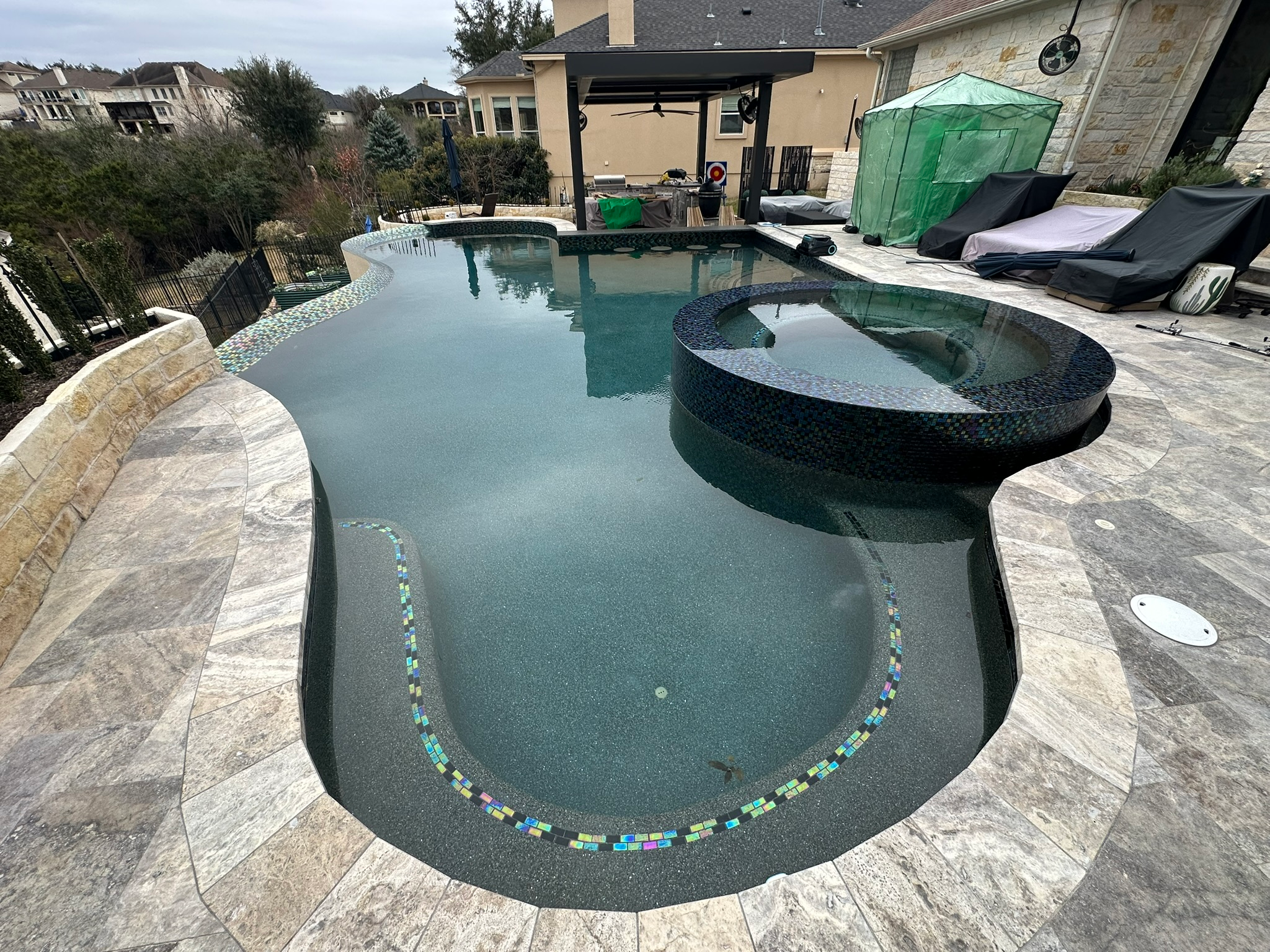
Why Existing Trees Matter in Austin Pool Design
Building an outdoor pool in an established Austin backyard requires more than selecting the right pool shape and location. Mature trees can define the character of a property, provide valuable shade, reduce heat exposure, and contribute to the overall landscape for decades. Their presence also introduces important structural and environmental considerations that should be addressed before excavation begins. Tree roots can extend far beyond the visible canopy, meaning a pool project planned only around the trunk can unintentionally damage a significant portion of the root system. At Renaissance Pools, we approach these projects by considering the relationship between the proposed pool, surrounding landscape, soil conditions, drainage patterns, and existing vegetation. Our objective is to create a beautiful outdoor swimming environment while taking practical steps to protect valuable trees throughout the construction process.
Understanding How Tree Roots Grow
One of the most important considerations when building a pool near an established tree is understanding that roots do not necessarily follow a simple pattern beneath the ground. Many trees develop extensive lateral root systems that spread outward in search of moisture, oxygen, and nutrients. A large percentage of a tree’s functional roots may be relatively close to the soil surface rather than directly beneath the deepest portion of the tree. Excavation that cuts through major roots can therefore affect tree stability, water absorption, and long term health. The size of the visible trunk does not always indicate the full extent of the underground root network. Before determining the pool footprint, we evaluate the landscape carefully so that excavation can be planned with greater awareness of the existing trees and their likely root zones.
Evaluating the Property Before Excavation
A successful pool project begins with careful site evaluation rather than immediately bringing excavation equipment into the backyard. We examine the location of mature trees, existing structures, property grades, drainage patterns, access points, utilities, and the proposed position of the pool and surrounding deck. The tree canopy can provide useful clues about the extent of the root system, although it should not be treated as an exact underground map. Soil conditions also matter because compacted, rocky, or disturbed soils can influence where roots develop and how they respond to construction activity. In Austin, the underlying soil characteristics can vary considerably from one property to another, making individualized planning especially important. Renaissance Pools uses the site evaluation process to identify potential conflicts early so that the final design can accommodate the landscape rather than forcing the landscape to accommodate an inflexible pool plan.
Creating a Pool Layout That Works With the Trees
The pool does not always need to be positioned as far away from every tree as possible to create a responsible design. Instead, the layout can be developed around the specific conditions of the property and the locations where excavation can be performed with less disruption. Sometimes shifting the pool several feet, changing the angle of the structure, or modifying the shape can significantly reduce interference with important roots. A curved pool edge or carefully positioned deck can sometimes provide more flexibility than a rigid rectangular footprint. The surrounding hardscape can also be designed to preserve existing landscape areas instead of creating one continuous field of concrete or paving. Our design process focuses on finding practical opportunities to preserve mature vegetation while still delivering the pool size, circulation space, entertaining areas, and visual balance the homeowner wants.
Why the Critical Root Zone Deserves Attention
The area around an established tree that contains important roots should receive special consideration during pool construction. While the exact boundaries of a root protection area depend on the species, age, condition, and site characteristics of the tree, the concept is straightforward because avoiding unnecessary root disturbance can reduce construction stress. Excavation within sensitive areas should be carefully evaluated rather than treated like ordinary open ground. Large structural roots can play an important role in supporting the tree, while smaller roots are involved in water and nutrient uptake. Cutting roots indiscriminately can create consequences that may not become visible until months or even years later. By recognizing the importance of the root zone before construction begins, homeowners and pool professionals can make better decisions about excavation, equipment access, materials, and final landscape restoration.
Choosing Construction Methods Carefully
The construction method used around established trees can have a major influence on the amount of disturbance a property experiences. Heavy machinery should not be allowed to move randomly across areas where important roots may be present, particularly when repeated traffic can compact the soil. Compacted soil can reduce the air and water available to roots and can create additional stress even when large roots are not visibly cut. Access routes should therefore be considered during the planning stage rather than after the pool design has already been finalized. In certain situations, alternative excavation approaches or more controlled equipment use may help reduce unnecessary disturbance. We consider the construction sequence as part of the overall project because protecting a tree involves more than simply drawing a pool several feet away from its trunk.
Protecting Trees During Construction
Tree protection should continue throughout the construction process rather than ending once the pool footprint has been established. Physical barriers can help prevent equipment, stored materials, construction debris, and workers from entering sensitive areas unnecessarily. The protected area should remain clearly identified so that it is not gradually reduced as construction progresses. Materials should not be piled against trunks or placed over areas where roots require access to air and moisture. Changes to grade around established trees should also be approached carefully because adding or removing significant amounts of soil can alter the conditions surrounding the roots. Renaissance Pools treats tree protection as an important component of responsible project management when a pool is being constructed in an established landscape.
Managing Soil Compaction Around Mature Trees
Soil compaction is one of the less obvious risks associated with backyard pool construction. A tree can appear completely untouched while repeated equipment movement compresses the soil around its root system. When soil becomes heavily compacted, pore spaces can be reduced, limiting the movement of air and water through the ground. This can create unfavorable conditions for roots even when no major root has been physically severed. Planning equipment routes and limiting unnecessary traffic through sensitive landscape areas can help reduce this risk. A thoughtful construction plan therefore considers not only where excavation will occur but also where trucks, machinery, workers, materials, and temporary equipment will travel during the project.
Dealing With Austin’s Heat and Dry Conditions
Austin’s climate adds another layer of consideration when mature trees and pool construction overlap. Hot weather can increase moisture demand, while construction activity can temporarily change the way water moves through portions of the landscape. Trees that already experience environmental stress may be more vulnerable to additional disruption during a major backyard renovation. Protecting existing soil conditions and maintaining appropriate moisture around unaffected root areas can support the landscape during the transition. Drainage should also be evaluated so that the finished pool and deck do not unintentionally redirect excessive water toward or away from established trees. Our approach considers the finished landscape as a complete system because the pool, hardscape, irrigation, drainage, and trees will continue interacting long after construction is finished.
Designing Decking Around Existing Trees
The pool deck is another area where thoughtful design can help preserve the character of an established backyard. Instead of automatically extending a large hardscape area around every side of the pool, the deck can be shaped to work with existing trees and planting zones. Leaving appropriate landscape areas around mature trees can create a softer transition between the pool and the surrounding property. Depending on the site, carefully planned deck edges can help maintain visual separation between tree trunks and hardscape surfaces. The result can feel more integrated than a design that removes every existing landscape feature to create a completely uniform pool environment. We look at decking as an architectural and landscape element together, allowing the final outdoor space to feel connected to the natural features already present on the property.
Preserving Shade and Natural Character
Existing trees can be one of the greatest assets in an outdoor pool environment because they contribute shade and visual depth that newly planted trees cannot immediately replicate. A mature canopy can make portions of the pool area more comfortable during hot afternoons and can provide a natural backdrop for the finished project. Removing healthy trees simply to simplify construction can also change the character of the entire backyard. When the site allows, preserving mature vegetation can make the completed pool feel as though it belongs naturally within the property. Careful positioning can also prevent trees from becoming obstacles while retaining the benefits they provide. Our goal is not simply to install a pool but to create an outdoor environment where architecture, water, hardscape, and established vegetation work together.
Selecting Trees Carefully for Poolside Locations
Not every existing tree is equally suitable for remaining immediately beside a swimming pool. Species characteristics, mature size, root behavior, canopy density, leaf drop, fruit production, and general health should all be considered when planning the relationship between a tree and a new pool. Some trees may create more maintenance challenges around water and decking because leaves, flowers, seeds, or other organic material can enter the pool. Other trees may be valuable landscape specimens that deserve additional protection because of their age, structure, or visual importance. A qualified arborist can provide valuable guidance when a particularly significant tree is located close to proposed excavation. Considering these factors before construction helps homeowners make informed decisions rather than discovering landscape conflicts after the pool is already complete.
Coordinating With Arborists When Necessary
Some properties require specialized tree expertise before excavation begins. This can be particularly important when a mature or valuable tree is located close to the proposed pool structure. An arborist can assess tree condition, identify potential root concerns, and provide recommendations for protecting the tree during construction. Their evaluation can complement the pool design process by identifying areas where excavation or equipment movement may create unnecessary risk. Collaboration between pool professionals and tree professionals can be especially useful when the project involves large established trees or complex grading conditions. Renaissance Pools can incorporate this type of specialized input into the planning process when the property calls for additional evaluation.
Planning Drainage Before the Pool Is Built
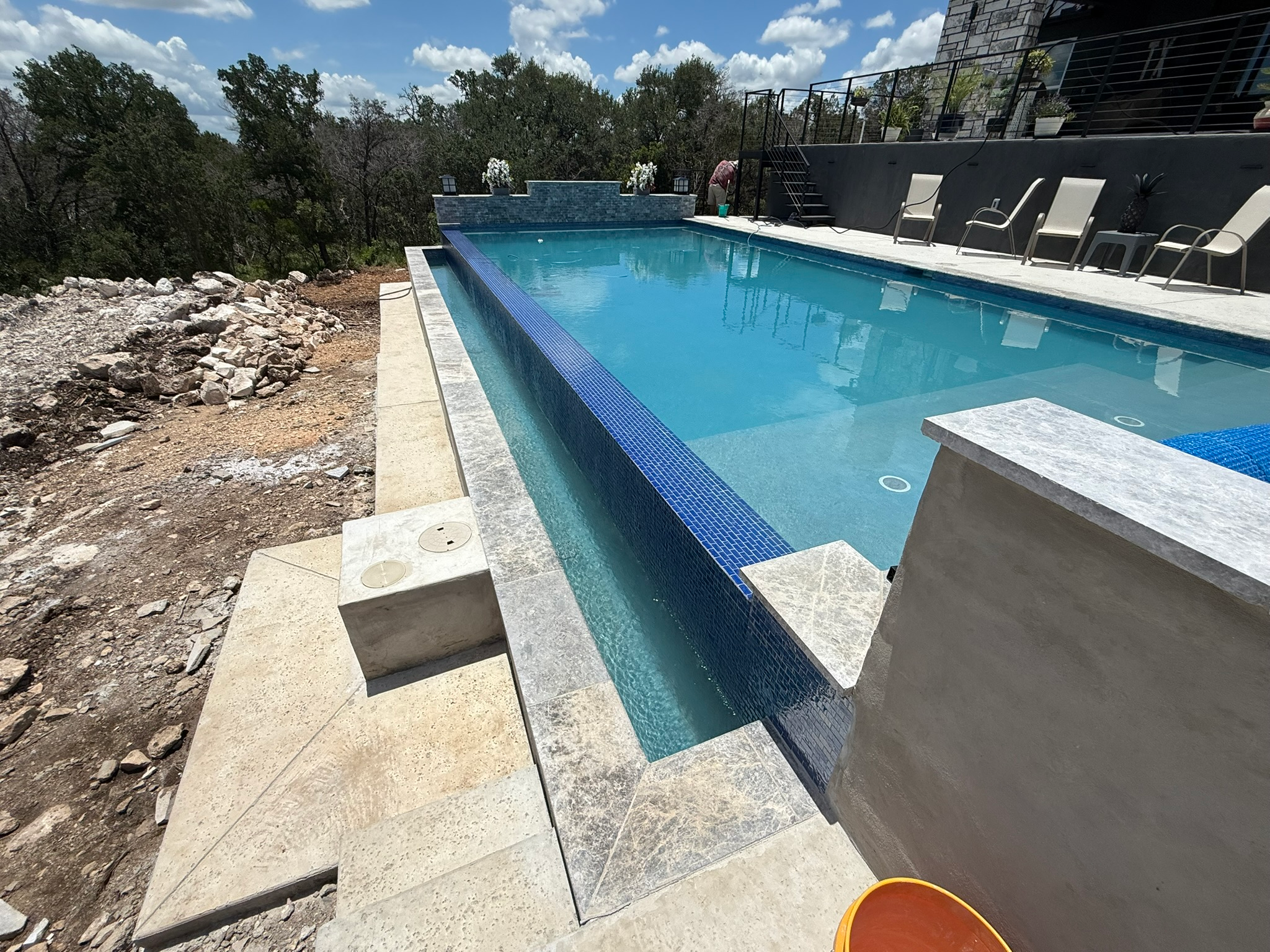
Drainage should never be treated as an afterthought when constructing a pool near established trees. Excavation, retaining structures, decking, and pool walls can change the way rainwater moves across a backyard. If drainage patterns are altered without careful planning, areas around existing trees may receive substantially more or less moisture than they did before construction. Poor drainage can also create standing water, soil erosion, or other landscape problems that affect both trees and the finished pool environment. A properly coordinated design considers the relationship between pool runoff, deck grades, yard drainage, irrigation, and existing landscape elevations. By planning these elements together, we can help create a backyard that functions properly instead of solving each drainage issue separately after construction.
Building a Pool Without Losing the Landscape
A new pool does not have to mean removing every established landscape feature from the backyard. In many cases, the strongest designs are those that incorporate existing trees, planting areas, architectural features, and natural grade changes into the overall concept. Trees can frame views of the pool, define outdoor rooms, and create a sense of permanence around a newly constructed space. Preserving mature vegetation can also reduce the visual contrast between a new pool installation and the existing property. The key is to plan the pool and landscape as connected components rather than treating them as separate projects. We work toward a finished environment where the swimming pool feels intentionally placed within the existing landscape rather than simply dropped into an empty section of the yard.
Long Term Tree Health After Construction
Tree protection does not end when the excavation equipment leaves the property. The weeks and months following construction can be an important period because trees may respond gradually to changes in their growing environment. Homeowners should continue observing trees for changes in canopy condition, leaf development, soil moisture, and overall appearance. Irrigation patterns may also need to be reviewed because the completed pool and hardscape can change how water reaches different areas of the yard. Newly installed landscaping should be coordinated with existing trees so that irrigation and planting do not create unnecessary competition or stress. With appropriate planning and ongoing care, homeowners can enjoy their new pool while maintaining the established trees that helped make the backyard special in the first place.
Creating a Backyard That Works for Years
An outdoor pool is a significant investment, so the best design should consider how the entire property will function years after construction is complete. Existing trees will continue growing, their canopies will change, and their root systems will remain an important part of the landscape. Pool decking, drainage, planting areas, access paths, and outdoor living spaces should therefore be planned with long term relationships in mind. A design that looks attractive on the day of completion may become difficult to maintain if it ignores the future growth of established vegetation. Thoughtful planning can help preserve both the usability of the pool and the character of the surrounding landscape. Our approach is centered on creating outdoor spaces that remain practical, attractive, and integrated with the property long after the construction phase has ended.
A More Thoughtful Approach to Austin Pool Construction
Building a pool around existing trees requires more planning than simply choosing a location that appears open from above. Root systems, soil conditions, construction access, drainage, equipment movement, deck placement, tree health, and future growth all need to be considered together. The right approach can reduce unnecessary disturbance while still providing homeowners with the pool and outdoor living environment they want. Mature trees should not automatically be viewed as obstacles because they can become defining elements of the finished design when incorporated thoughtfully. Renaissance Pools believes that successful pool construction should respect the existing character of the property while introducing new features that improve how homeowners use their outdoor space. With careful site planning and responsible construction practices, an Austin backyard can gain a beautiful pool without unnecessarily sacrificing the health and presence of its established trees.