
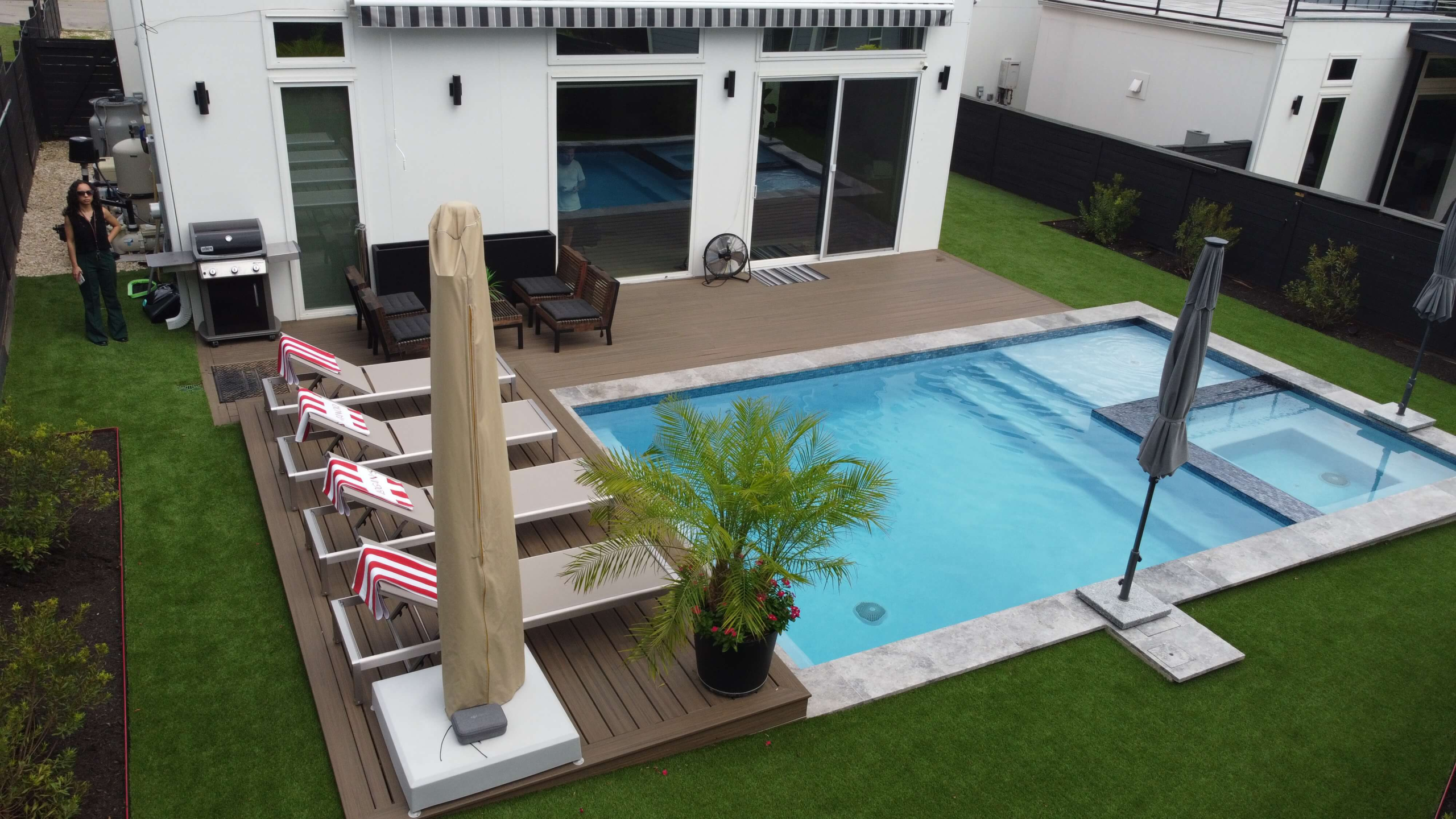
Designing Pools as Microclimate Systems in Austin
In a city defined by long summers, fluctuating humidity, and intense sunlight, a swimming pool can be more than a recreational feature. It can function as a carefully engineered microclimate system that reshapes how a property feels, performs, and ages over time. We approach pool design with this broader lens, integrating environmental responsiveness into every decision.
Beyond Aesthetic Appeal
Traditional pool design often prioritizes visual symmetry, materials, and size. While those remain important, they only scratch the surface. A pool interacts continuously with air temperature, solar radiation, wind patterns, and surrounding structures. When designed strategically, it can lower ambient temperatures, reduce heat retention in outdoor living spaces, and even influence indoor comfort levels.
In Austin’s climate, where heat buildup can be intense, this approach is not a luxury. It is a functional upgrade.
Water as a Thermal Regulator
Water has a high thermal mass, meaning it absorbs and releases heat more slowly than surrounding materials like concrete or stone. By positioning a pool in alignment with sun exposure patterns, we can:
• Reduce heat reflection from hard surfaces
• Create cooling air currents across patios and shaded zones
• Moderate temperature spikes during peak afternoon hours
This transforms the pool into an environmental stabilizer rather than just a visual centerpiece.
Strategic Placement and Orientation
Pool orientation is a technical decision, not a random one. We analyze:
• Sun path across seasons
• Prevailing wind directions
• Proximity to structures and vegetation
For example, placing the pool where it captures late afternoon sun but avoids prolonged midday exposure can improve usability while reducing excessive water heating. Similarly, aligning the pool with prevailing breezes enhances evaporative cooling, making outdoor spaces more comfortable without mechanical intervention.
Material Selection as Performance Engineering
Materials surrounding a pool significantly impact thermal behavior. Light colored surfaces reflect heat, while darker tones absorb it. Natural stone, porcelain pavers, and textured finishes all behave differently under Austin’s sun.
We select materials based on:
• Heat reflectivity index
• Slip resistance under wet conditions
• Durability against UV exposure
This ensures that the pool area remains comfortable to walk on and maintains structural integrity over time.
Integrating Vegetation for Climate Control
Landscaping is not just decorative. It is a critical component of microclimate design. Trees, shrubs, and vertical greenery can:
• Provide dynamic shade throughout the day
• Reduce wind turbulence
• Improve humidity balance
Strategically placed vegetation works in tandem with the pool to create a layered cooling effect. This is particularly valuable in urban neighborhoods where heat retention from surrounding structures is high.
Water Features That Do More Than Look Good
Elements like fountains, spillways, and cascades are often viewed as aesthetic upgrades. In reality, they enhance air movement and increase evaporative cooling. The sound of moving water also contributes to sensory comfort, masking urban noise and creating a more immersive outdoor environment.
When designed correctly, these features support both environmental performance and user experience.
Energy Efficiency Through Smart Systems
A microclimate focused pool design extends into equipment selection. Variable speed pumps, automated filtration systems, and smart controls allow us to optimize energy use without compromising performance.
We consider:
• Pump efficiency curves
• Filtration cycles based on usage patterns
• Automated temperature and lighting controls
This reduces operational costs while maintaining water quality and system longevity.
Long Term Property Value
A pool designed as a microclimate system offers benefits that go beyond immediate enjoyment. It contributes to:
• Increased property usability year round
• Reduced wear on outdoor surfaces due to moderated temperatures
• Enhanced resale appeal through functional design differentiation
Buyers increasingly recognize the value of outdoor environments that are not only beautiful but also intelligently engineered.
Our Approach to Innovation
At Renaissance Pools, we treat each project as a convergence of design, engineering, and environmental science. We do not simply install pools. We build systems that interact with their surroundings in meaningful ways.
By focusing on microclimate optimization, we ensure that every pool contributes to comfort, efficiency, and long term value. In a climate like Austin’s, that level of precision is what separates an ordinary installation from a truly transformative outdoor space.
Final Perspective
The future of pool design lies in integration. A pool should not exist in isolation from its environment. It should enhance and regulate it.
When we approach pool construction with this mindset, we move beyond aesthetics into performance driven design. The result is a space that feels cooler, functions smarter, and delivers lasting impact in every season.